AIWG Research Group’s Final International Conference
What do the hadiths tell us about the life and personality of the Prophet Muhammad? What significance do context, audience and discourse have for their interpretation? How can these traditions be read, researched and communicated today? International scholars addressed these questions at the final conference of the AIWG research group ‘In conversation with theProphet Muhammad?’, which took place on 7 and 8 October 2026 at the Centre for Islamic Theology (ZITh) at Eberhard Karls University of Tübingen.
Under the title ‘In conversation with the Prophet Muhammad? The hadith between existential relevance and discrepancy in history, theology, and pedagogy’, this conference brought together 18 international academics with different perspectives from the fields of history, theology and religious education. It focused on the question to what extent hadiths can be understood not only as historical sources or as normative religiouse texts, but also as a medium for a dialogical encounter with the Prophet Muhammad. Discussions addressed their existential and spiritual relevance as well as historical complexities, controversial content and hermeneutical challenges.
Encountering the Prophet Muhammad in the Hadith
The first day focused on different approaches to the life and teachings of the Prophet. Following the welcoming remarks, Prof. Dr. Ruggero Vimercati Sanseverino presented the project of the AIWG research group and situated it within the context of current issues in the field. He called for a decolonization of academic Hadith studies, with the goal of acknowledging the specific textual nature of the Hadith and not ignoring the associated epistemic and hermeneutic presuppositions.
A panel on Islamic religious education examined the role played by hadiths in religious education and in school textbooks, and how challenging content can be addressed from a didactic perspective. Other presentations explored the significance of prophetic traditions for spirituality, religious authenticity and educational processes.
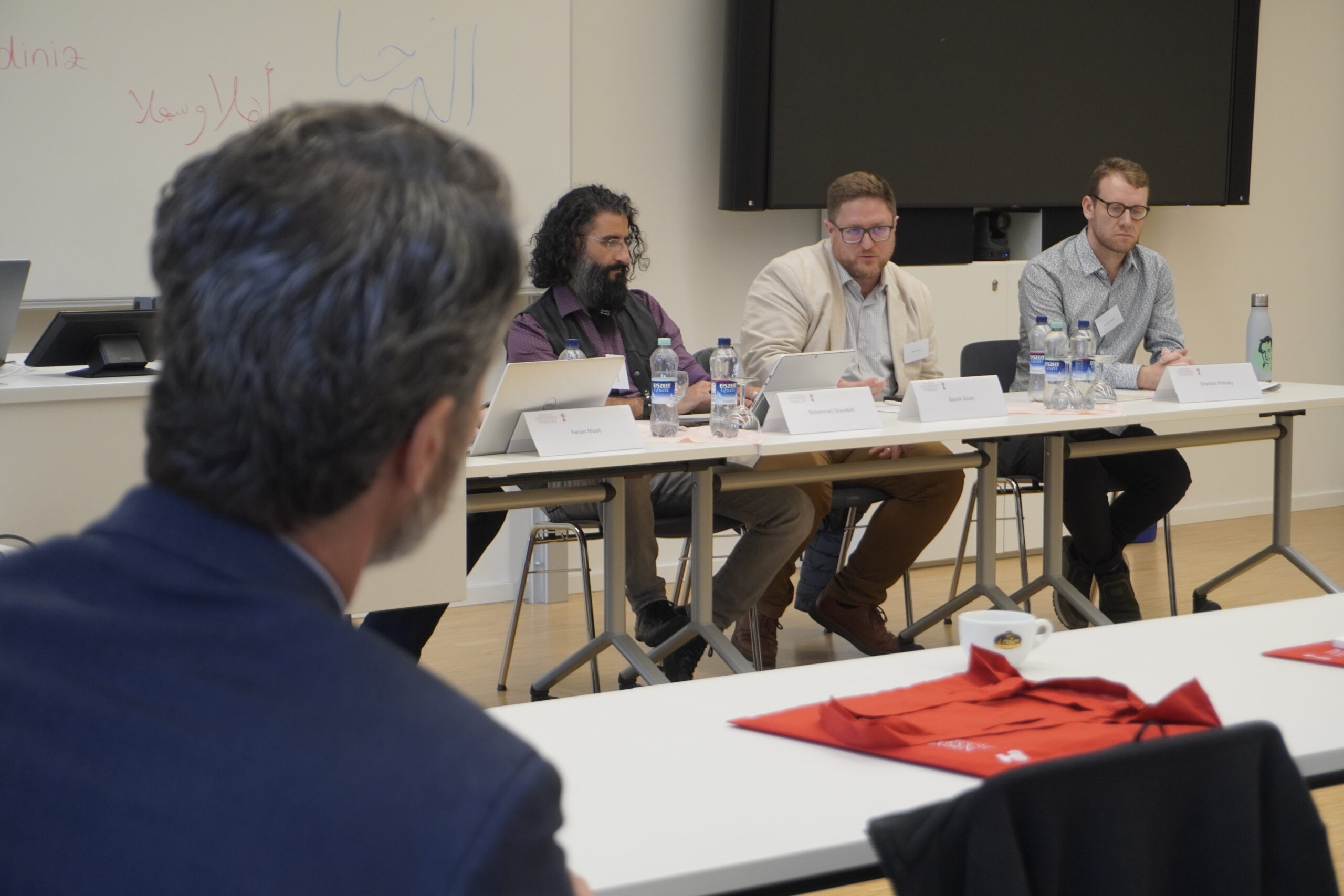
Another topic of significance was the historical contextualisation of hadiths. Discussions centred on what language can reveal about the respective communicative situations and the Prophet’s audience, and how the occasions of their emergence (Asbāb al-wurūd) can assist in the historical and social contextualisation of individual hadiths. In addition to classical methods, digital and computer-assisted methods were presented. In doing so, the conference also examined the potential and limitations of such methods in researching hadiths.
The prophetic voice in the written record
On the second day of the conference, the focus shifted to the textual and linguistic characteristics of the transmissions. Various papers examined hadiths as transmitted testimonies, communicative acts and forms of discourse. The relationship between oral and written transmission was discussed, along with the associated epistemological, theological and hermeneutical questions. These include the testimonial nature of the hadith and the resulting resonant quality, which endows the hadith tradition with transformative potential and opens up promising perspectives in the aesthetics of reception. It also became clear that the “openness” of the hadith is inherent in the text and its transmission, as well as the need to examine the hermeneutic sensibility of the “model reader,” as presupposed by the text.
Also, the role of hadith collections was examined beyond the traditional question of the authenticity of individual traditions. The speakers discussed spiritual interpretations within Ibadism, an independent Islamic tradition of faith and law prevalent primarily in Oman, as well as the significance of hadith collections for the development of a Sunni identity. Furthermore, they asked why scholars have repeatedly compiled new collections over the centuries.
Finally, the participants engaged in a constructive discussion about hadiths that appear controversial or contradictory. The question was raised as to whether the perceived contradictions lie within the traditions themselves or arise from particular interpretations and preconceptions. The question of the intended audience of hadiths that appear controversial or ‘problematic’ was also a key consideration.
In a dialogue that crosses borders, disciplines and research perspectives
The six panels at the two-day conference highlighted the thematic and methodological diversity of contemporary international Hadith research. At the same time, they demonstrated how closely historical source criticism, theological reflection and current issues of education and identity are interlinked. The interdisciplinary exchange offered new research perspectives on the relevance of the hadith and its historical transmission to Muslim life and thought. In particularly, it has become clear that previous explanations are unable to fully explain why hadiths continue to appeal to Muslims even in secularized and individualized societies, and what this implies about Muslims’ relationship with their Prophet, beyond polarized public discourse.
The broad international attendance underscored the academic relevance of the research topic and the strong response to the work of the organising AIWG research group.
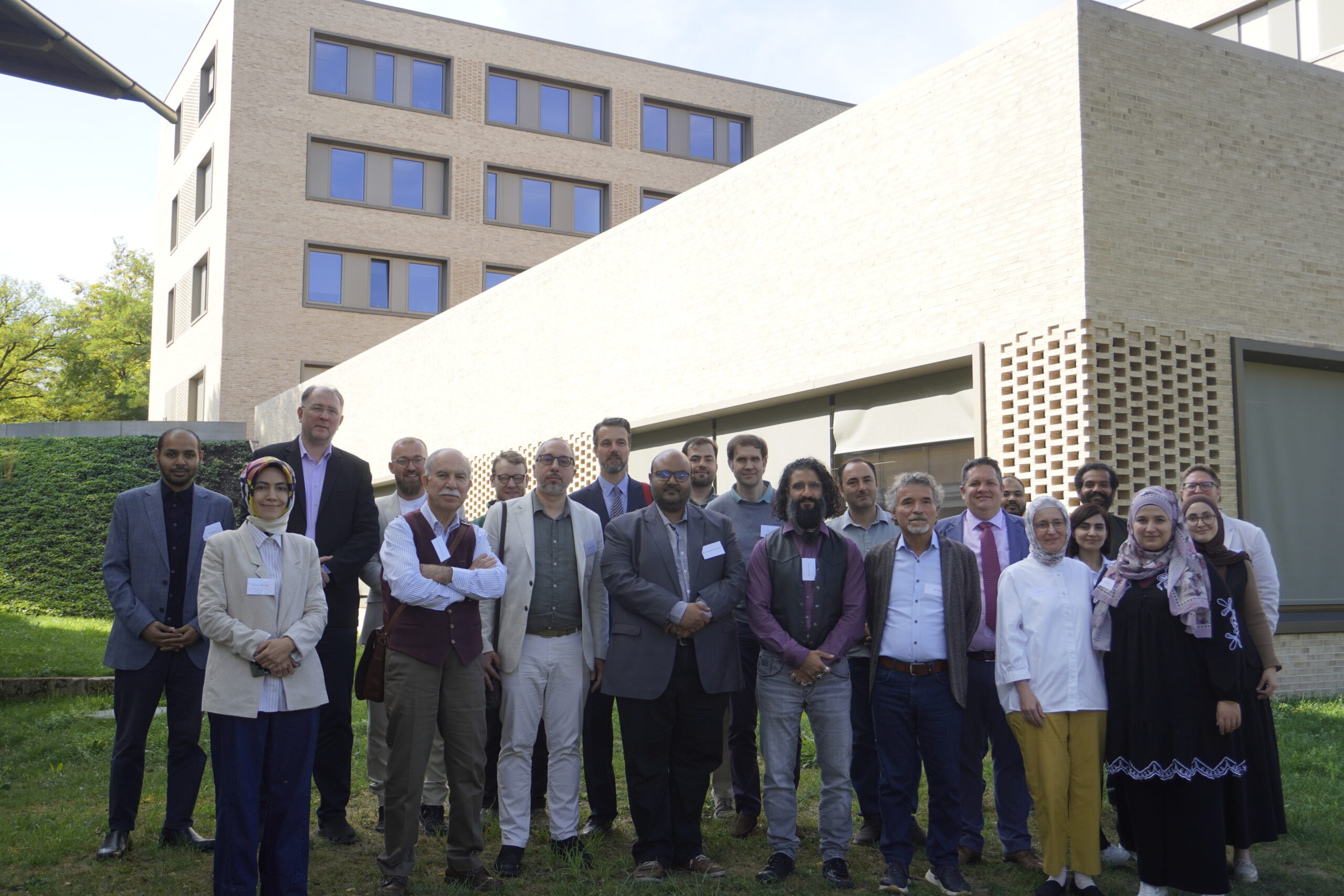
The project ‘In conversation with the Prophet Muhammad? The hadith between existential relevance and discrepancies in history, theology and pedagogy’ is being carried out jointly by researchers from Humboldt University in Berlin, Justus Liebig University in Giessen and Eberhard Karls University in Tübingen as part of the Academy for Islam in Research and Society (AIWG). It is funded by the BMFTF.