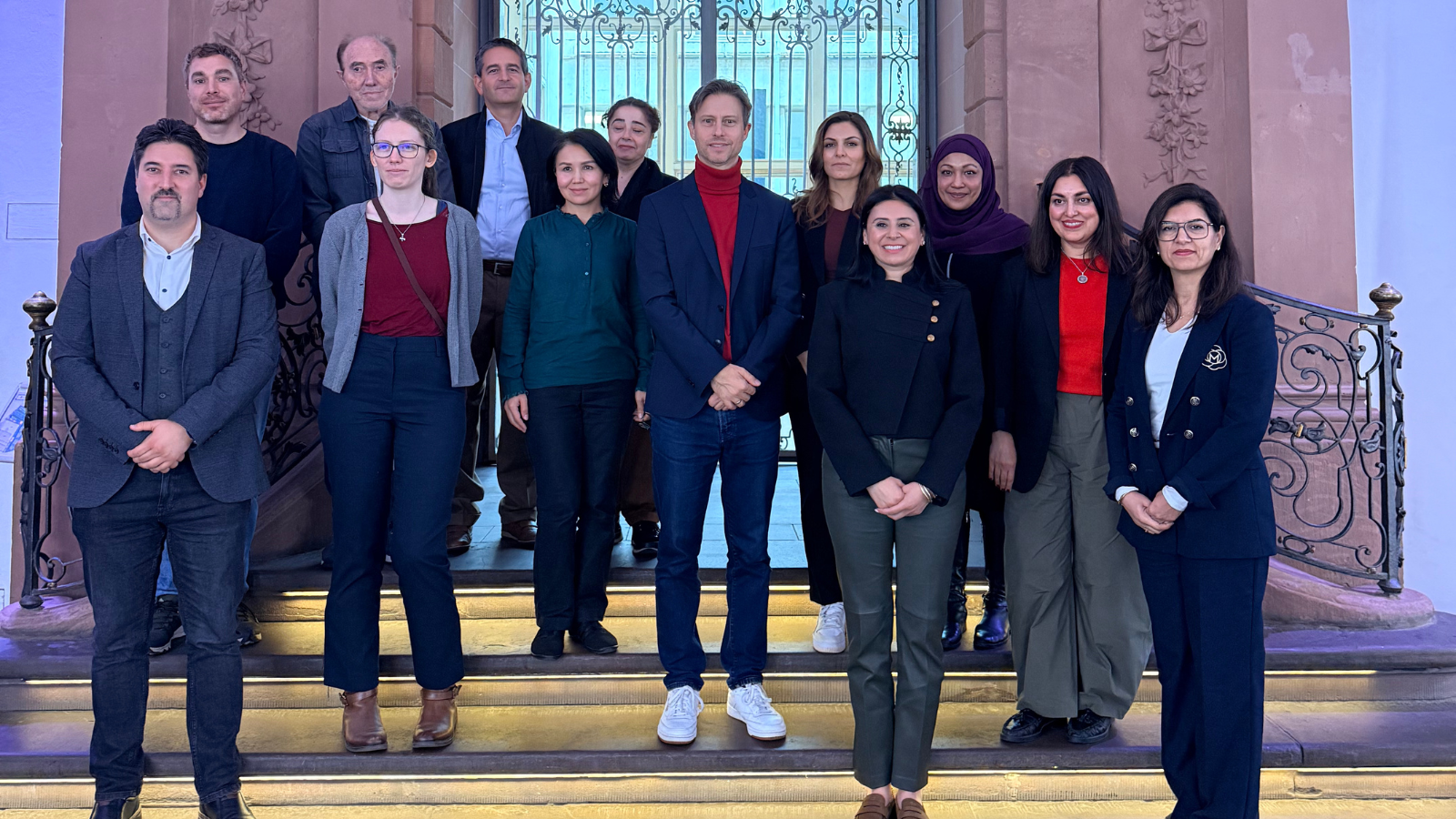
AIWG-Roundtable Connects Sufi Communities and Academic Researchers
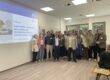
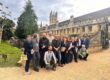
AIWG and MTO invited scholars and community members to the AIWG roundtable “Sufism in Germany: Research and Practice “, October 16, 2026, in Frankfurt. The discussion focused on the relationship between academic research, lived religious practice, and knowledge transfer.
After brief welcoming remarks by AIWG Director Bekim Agai and MTO board member Galia Díez, moderator Negah Angah, an AIWG Practical Fellow, opened the discussion. PD Raid Al-Daghistani from the University of Innsbruck began with an overview of how Sufism has been researched in Germany to date. Given the breadth of the field, he highlighted the need for a specialized professorship, as well as stronger collaboration and exchange between academics and Sufi communities. He also pointed to a significant research gap concerning ideas and concepts within Sufism, including, for example, the integration of Sufism into chaplaincy.
When the discussion was opened to all participants, they shared their ideas and experiences, and the role of Sufism in education quickly emerged as an important topic. The discussion also touched on the curriculum for Islamic Sufism religious education in Hesse as an example of how the spiritual dimension of Islam can be included in school education. It became clear that spirituality is often missing from education, despite generating considerable interest. Participants agreed that spirituality and Sufism are often misunderstood, partly because access to these topics can be limited and because of language barriers. Many Sufi terms and concepts originate in Arabic, Farsi, and other non-European languages; translation and retranslation can therefore obscure their meaning and specificity.
After exploring the academic study of Sufism, the discussion turned to the community perspective and spiritual practices, presented by a member of MTO Shahmaghsoudi KdöR. MTO understands itself as a school of Islamic Sufism that teaches methods for connecting with one’s own spiritual dimension, based on Islamic principles such as unity and balance. A key interest was how to build connections with universities and integrate Sufism into parts of the curriculum.
The concluding discussion explored ways to connect academic research with the practice of spirituality. Researchers with expertise in different fields and regions, including India, Pakistan, Malaysia, and Indonesia, contributed new perspectives and an interdisciplinary approach. Suggestions ranged from providing access to Sufi communities and offering practical sessions in which students could learn directly from community members, to organizing further collaborative events between educational institutions and Sufi communities. Participants also discussed the potential uses of AI and the risks it may pose.
Looking ahead, the participating researchers expressed interest in staying in contact with MTO to explore opportunities for future collaboration between academic research and Sufi communities.
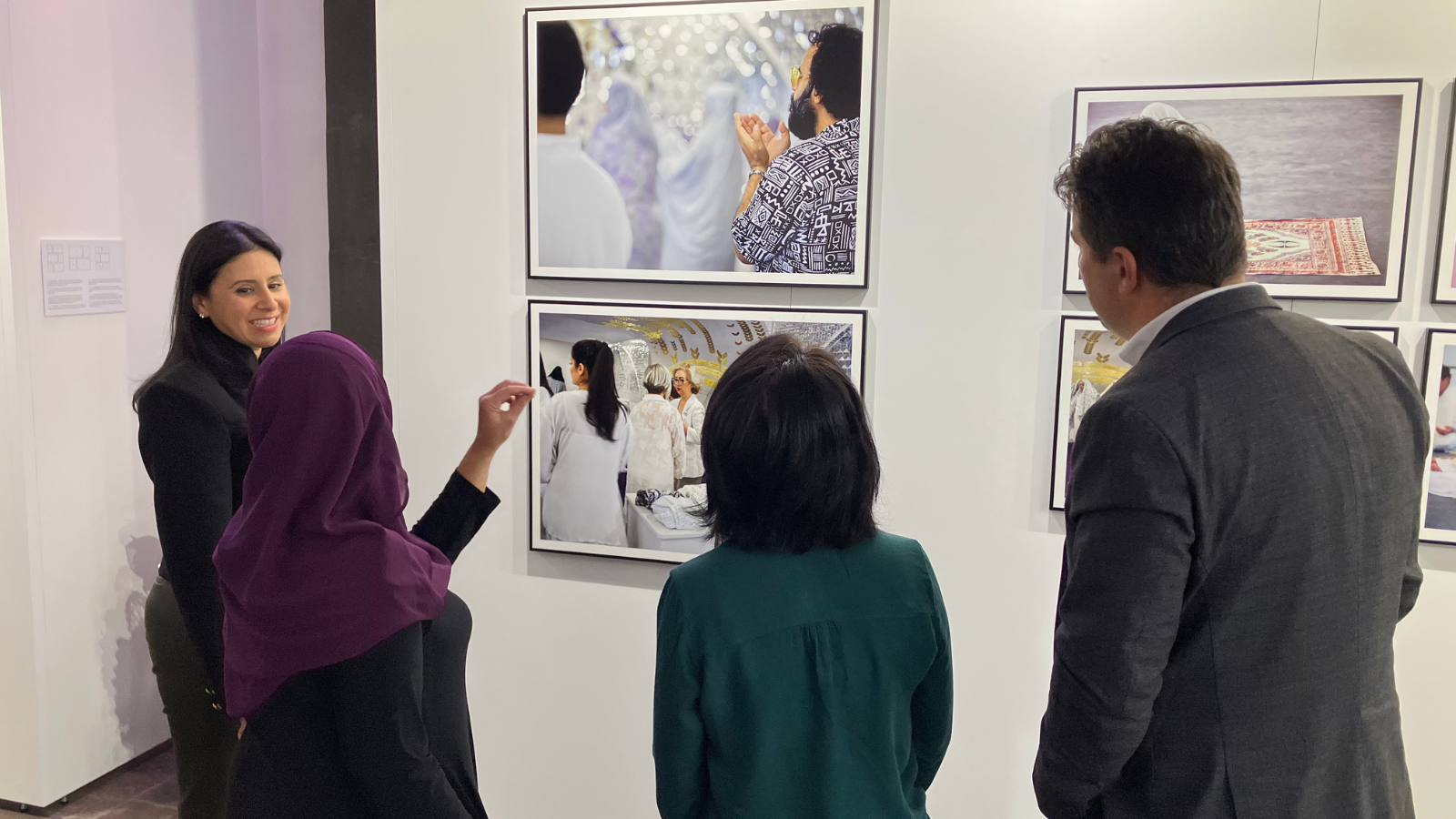
As the event took place in the space at the photography exhibition “Seen and Unseen: Sufi Life in Frankfurt,” it concluded with a brief introduction to the exhibition and a guided tour led by AIWG Fellow Negah Angah, who is also the exhibition’s curator. Some of the photographs were taken as part of Negah Angah’s practical fellowship.
You can find more information about Negah Angah’s project here.