
International Workshop in Berlin on Muslim Military Chaplaincy
How can Muslims soldiers in Germany, in their everyday lives as well as when deployed, receive spiritual care? What challenges arise on the road to creating spiritual care for Muslim soldiers in the German Armed Forces? And what models of military chaplaincy exist in other European countries?
These and related questions were the focus of an international workshop entitled “Muslim Military Chaplaincy in European Armed Forces. Needs, Governance and Professional Formation”, 11th and 12th September 2026 in Berlin
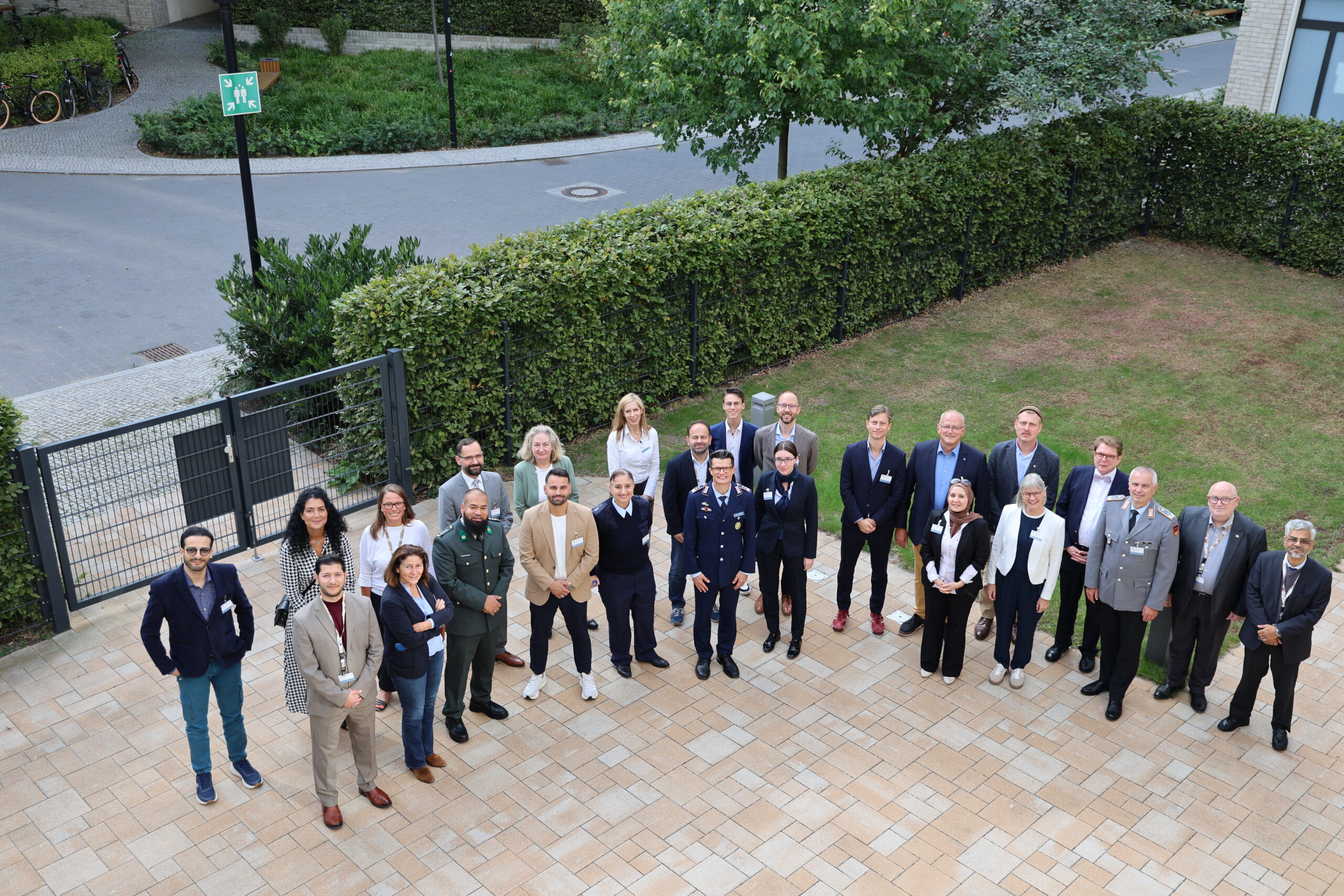
The workshop was convened by the Academy for Islam in Research and Society (AIWG) which is part of Goethe University Frankfurt, and the German Armed Forces Association. Participants included officials from the German Ministry of Defence, international researchers and Muslim military chaplains, as well as Muslim soldiers from the British, Dutch and German Armed Forces.
“The aim was to share information on the current status of Muslim military chaplaincy in the European context and to draw conclusions from the experiences of others in current efforts to build Muslim military chaplaincy services with in the German Armed Forces”, said Captain (ret.) Jörg Greiffendorf, topic lead on military chaplaincy at the German Armed Forces Association.
European Countries Are Taking Different Paths in Implementing Muslim Military Chaplaincy
Differences were particularly evident in the varying levels of progress made by European countries. France and the United Kingdom have benefitted from established Muslim military chaplaincy services since 2005. In the Netherlands this has been the case since 2009. Germany on the other hand is only at the beginning of this journey, currently implementing Muslim military chaplaincy services in a pilot scheme.
Discussions during the workshop showed that none of the existing models can easily be translated to fit the German system. Notably, relations between church and state differ too widely between countries. Thus, the French principle of laïcité is fundamentally different from the German model in which military chaplaincy is carried out on the basis of a contract between church and state.
One of the conclusions of the workshop: The focus has to be on the concrete needs of the approximately 3,000 Muslim soldiers in the German Armed Forces.
The presence of a military imam could help ensure the constitutionally guaranteed freedom of religious practice for Muslim military personnel. As a contact person of the commanding officer, he could also strengthen the visibility of Muslim personnel in the troops.
A session on education and training provided nuanced insights. There was general agreement that theological training regarding Islam as well as genuine military knowledge was vital. To achieve this, in France the completion of a two-year training programme is required. In the United Kingdom the focus is on the ability to manage the diversity of different denominations within Islam. In Germany, proceeding on the basis of the principles defined by “inner leadership” (“Innere Führung”) and incorporating these as an important moral compass for chaplaincy work are paramount.
During a concluding session, attending Muslim soldiers and experts emphasised that chaplaincy representation is a right and not an added benefit to be graciously granted. In their view, the international comparison showed that long-term institutionalisation was possible, increasing Muslim military personnel’s visibility and strengthening the troops’ solidarity. Participants agreed that such insights provided orientation, but that the German context required tailored solutions. It was concluded that the exchange should continue.
[Source: KG/DBWV]
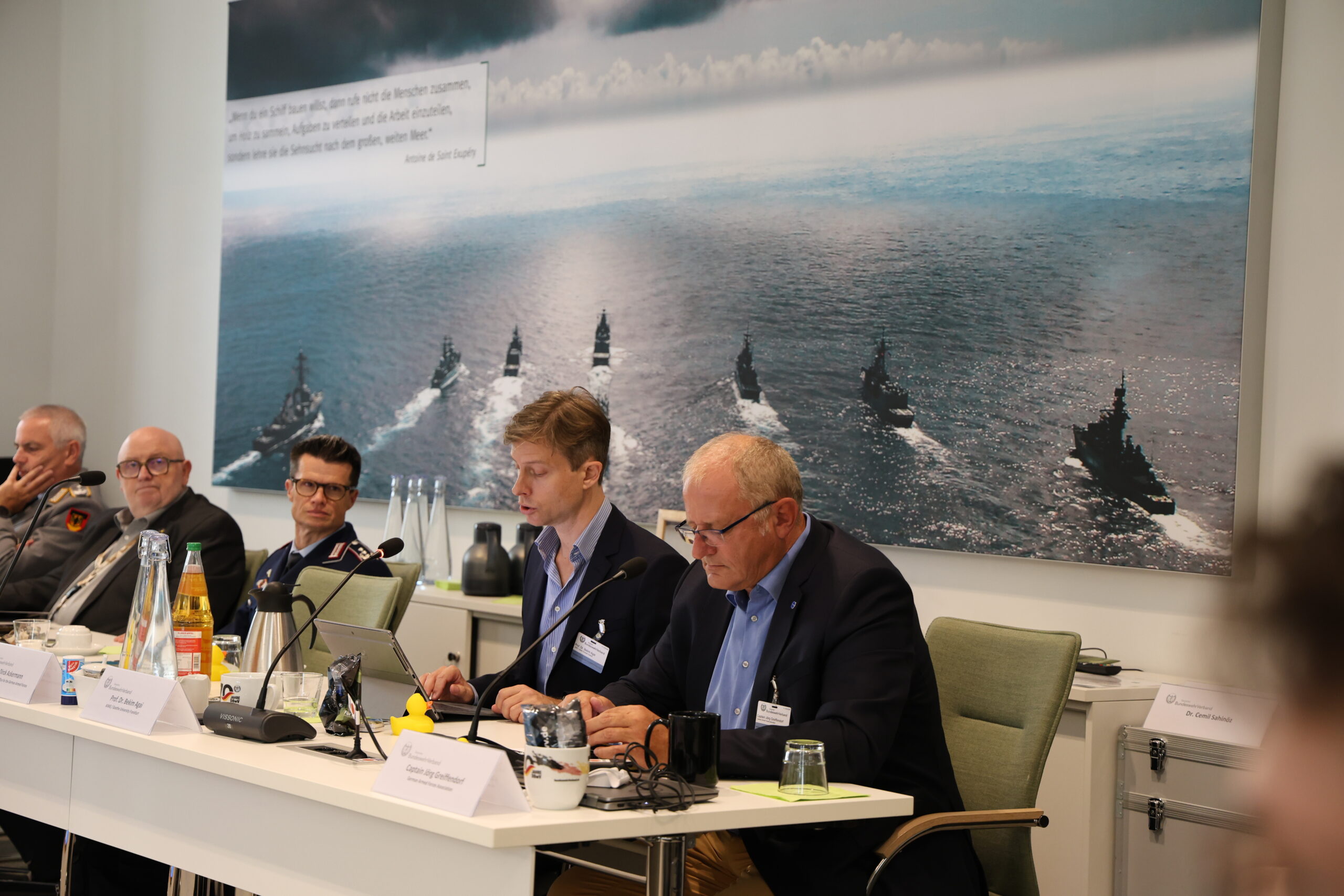
Image: Eva Krämer
Developing Existing Structures in Response to Changing Religious and Social Conditions
For the AIWG, the Berlin Workshop on Muslim Military Chaplaincy made clear that the establishment of Muslim military chaplaincy in European armed forces cannot be reduced to a single institutional or organisational question. Rather, a variety of actors, of constitutional frameworks governing religion, of military requirements, of sociopolitical debates and of administrative logics intertwine. The central challenge, and one that does not only affect Muslim soldiers, is the question of how to deal with the increasing ideological, religious, and cultural pluralism within the armed forces. Long-established structures within the militaries of the countries represented at the workshop may also present difficulties. Which models will be successful will depend on administrative feasibility, the political and institutional will to implement changes, as well as current societal and security policy factors.
According to the AIWG’s managing director, “Germany is still at the beginning of implementing a structure for Muslim military chaplaincy. At the same time, the new pilot scheme marks an important step from theoretical debate to practical implementation. Experiences from other countries in implementing Muslim military chaplaincy can help provide orientation, but should not be seen as a ready-made model to be copied directly. Experiences from Christian military chaplaincy can also provide valuable points of reference.”
It is not about creating new structures or uncritically adopting existing ones. It is about learning from the latter and developing them within a different framework of religious and social conditions.
What Input Can Muslim Organisations and Chaplaincy Training Institutions Offer?
The question of the role of Muslim organisations was not resolved conclusively. Muslim soldiers and their needs were put at the centre of discussions independently of their affiliation with Muslim communities. However, especially in a system such as the German one which is characterised by a corporatist approach to constitutional religionissues of representation, institutional recognition, trust, responsibilities, and the involvement of Islamic organisations remain important.
Recruitment and training are likewise key areas of development. The still relatively recent discipline of Islamic Theology at universities has created a good basis for this. To some extent, training facilities already exist which combine religious Islamic education with chaplaincy competences.
From the AIWG’s perspective, when it comes to military practice the question Germany has to consider, is how to bring together the existing institutions and qualified stakeholders from the German Armed Forces, universities, and religious communities in a process aimed at developing a solid foundation for establishing and expanding Muslim military chaplaincy.
The original news article from the German Armed Forces Association from 16th September 2026 can be found here.